
Britain has the energy. Let’s use all of it.

Why does a war thousands of miles away decide what you pay to keep warm?

Because in 2025, 43% of the energy Britain needs was bought from abroad.1 Energy security is national security, and Britain is safer when more of its energy is in its own hands. The more of our power we make here, the less a foreign war can take from you.

We need more power made here, put to work in our homes, factories and transport. Wind, solar, nuclear, oil and gas all have a part to play, and we need to get on with it now.

More British built power means stronger British industry, more British jobs, lower bills and a stronger Britain.

What is electrification?

Running more of Britain on British-made electricity instead of oil and gas. Heat, transport and industry can all do the same job with about a third of the energy.2

91%

Nine in ten units of our electricity are already generated in the UK, and nearly two-thirds of it is low-carbon.

Low-carbon, generated here (58%) Gas and other fuels, generated here (33%) Imported (9%)

Now we need to use it.

19%

But less than a fifth of the energy we use is electric.3 The rest is mostly oil and gas, much of it imported.

Electric (19%) Oil, gas and other fuels (81%)
UK, 2025. Shares rounded to add up to 100%. Source: DESNZ, Digest of UK Energy Statistics 2026.

Run Britain on power made here, and less of your bill is decided abroad.

End the gas-price lottery.

Why are we paying 58% more for energy this winter than in winter 2021/22?4 Because gas still sets the price of our electricity most of the time, and that price is set on world markets.5 That’s the gas-price lottery, and British families keep losing.

The North Sea has a part to play, but its gas is sold at the world price, not a British one. The way out is more British power, put to good use. Right now, we waste it.

In 2025, Britain paid around £1.4 billion to switch off wind farms and fire up gas instead, because the grid and the rules weren’t built to use what we make.6 Cut the red tape, fix the wiring, and gas sets our bills less often.

For years we’ve been told the answer is to use less. Common sense says use more of the power we make here, at the right times and in the right places. Much of the system is already built. The more homes, businesses and data centres run on it, the less of the cost of that system each unit has to carry, and the more productive Britain becomes.7 Abundant British power is a triple win: lower bills, better lives and a growing economy.

Moving costs around the bill buys a few months. Making proper use of British power lowers bills for good.

The sooner we act, the less the next shock costs. If another 2022-style gas shock hits in 2030, household bills rise by around 32% on our current path. Stop building fixed-price British power and that rise is around 73%.8

An energy bill sliding out of its envelope: under the October 2026 price cap, typical bills are 58% higher than in winter 2021/22, at the same level of use, before inflation.

Illustration. Typical bill under the October 2026 price cap compared with winter 2021/22, at the same level of use and before inflation. Source: House of Commons Library.

British industry pays more for electricity than any EU country.

Prices include taxes and policy costs, but what sets our wholesale price most of the time is gas. Pick a country to compare.

Electricity for medium industrial users (2,000–19,999 MWh a year), taxes included except VAT and recoverable levies, July–December 2025, the latest data. Source: DESNZ Quarterly Energy Prices, table 5.4.2 (derived from Eurostat). Full ranking and sources →

Power British businesses.

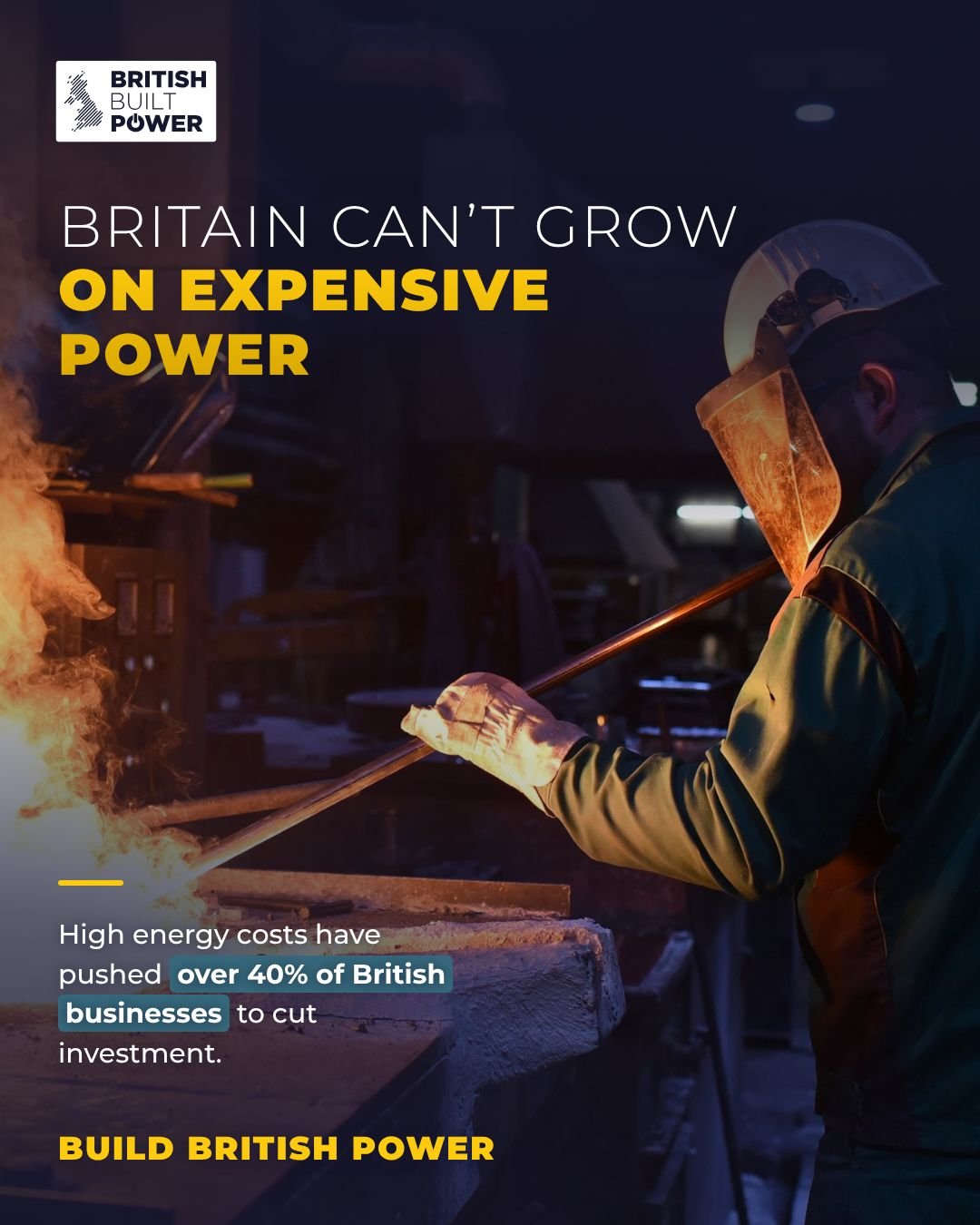
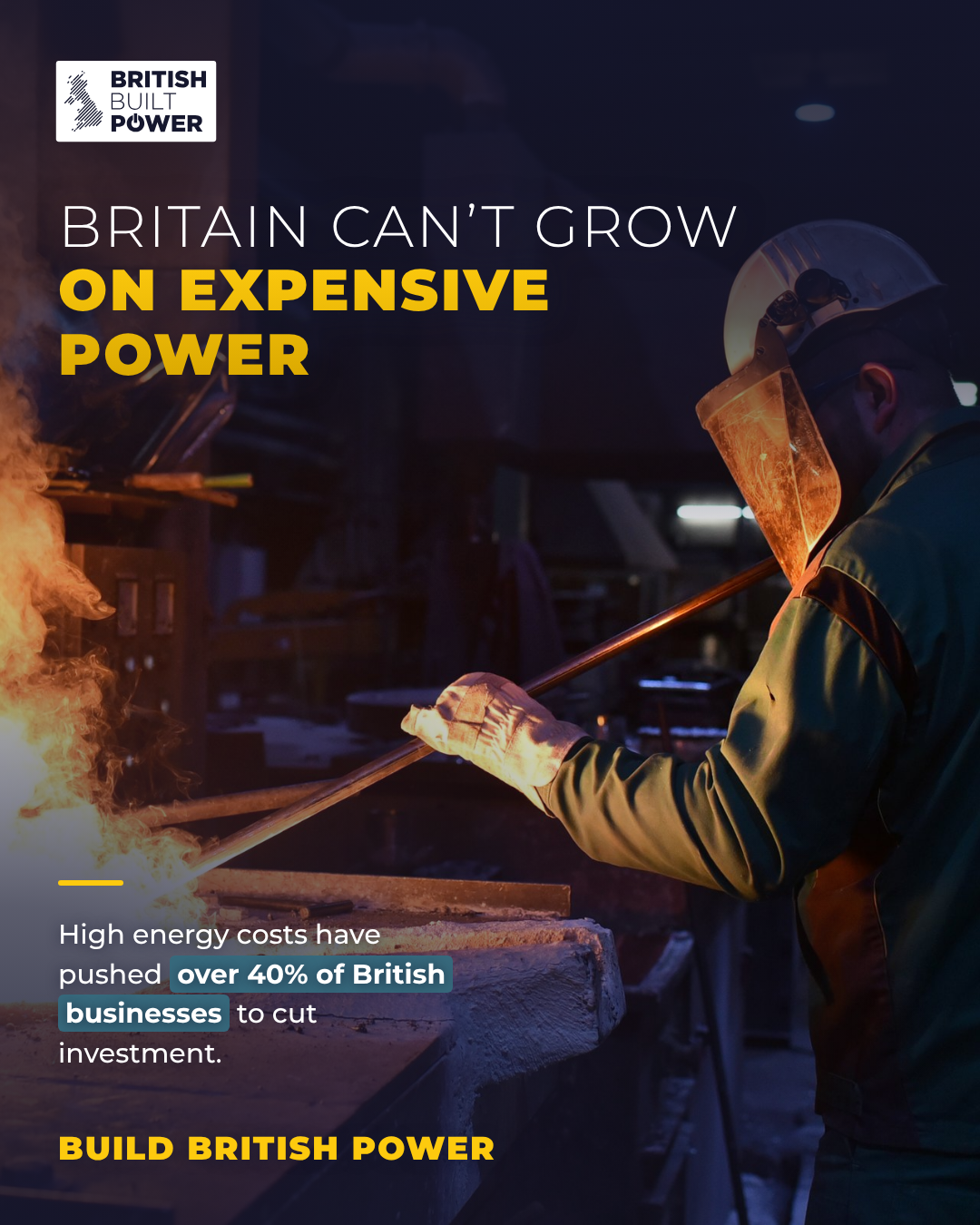
Every British business runs on electricity, from the corner shop and the local pub to the factory floor and the data centre. Yet in 2023, British industry paid four times what American firms paid for electricity, and nearly 50% more than French and German firms.9 High energy costs have already pushed over 40% of British businesses to cut investment.10

China has doubled the electric share of its energy use since 2005.11 Britain has stood still at around a fifth.3 Beijing is winning the race for cheap power while Westminster dithers.

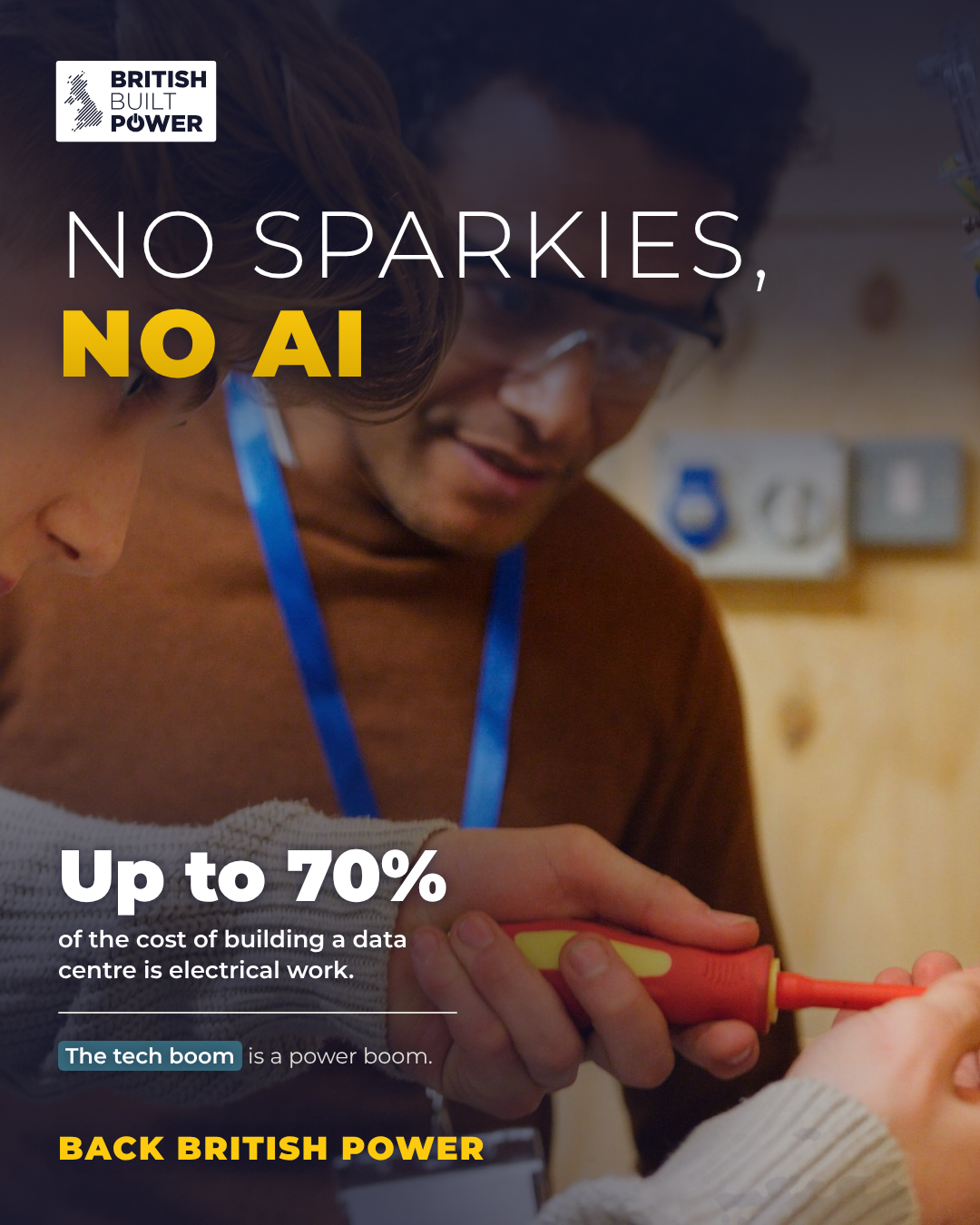
Cheap power makes the whole economy more productive. AI, software and advanced manufacturing all run on electricity, and they need proper skills to build. Up to 70% of the cost of building a data centre is electrical work.12

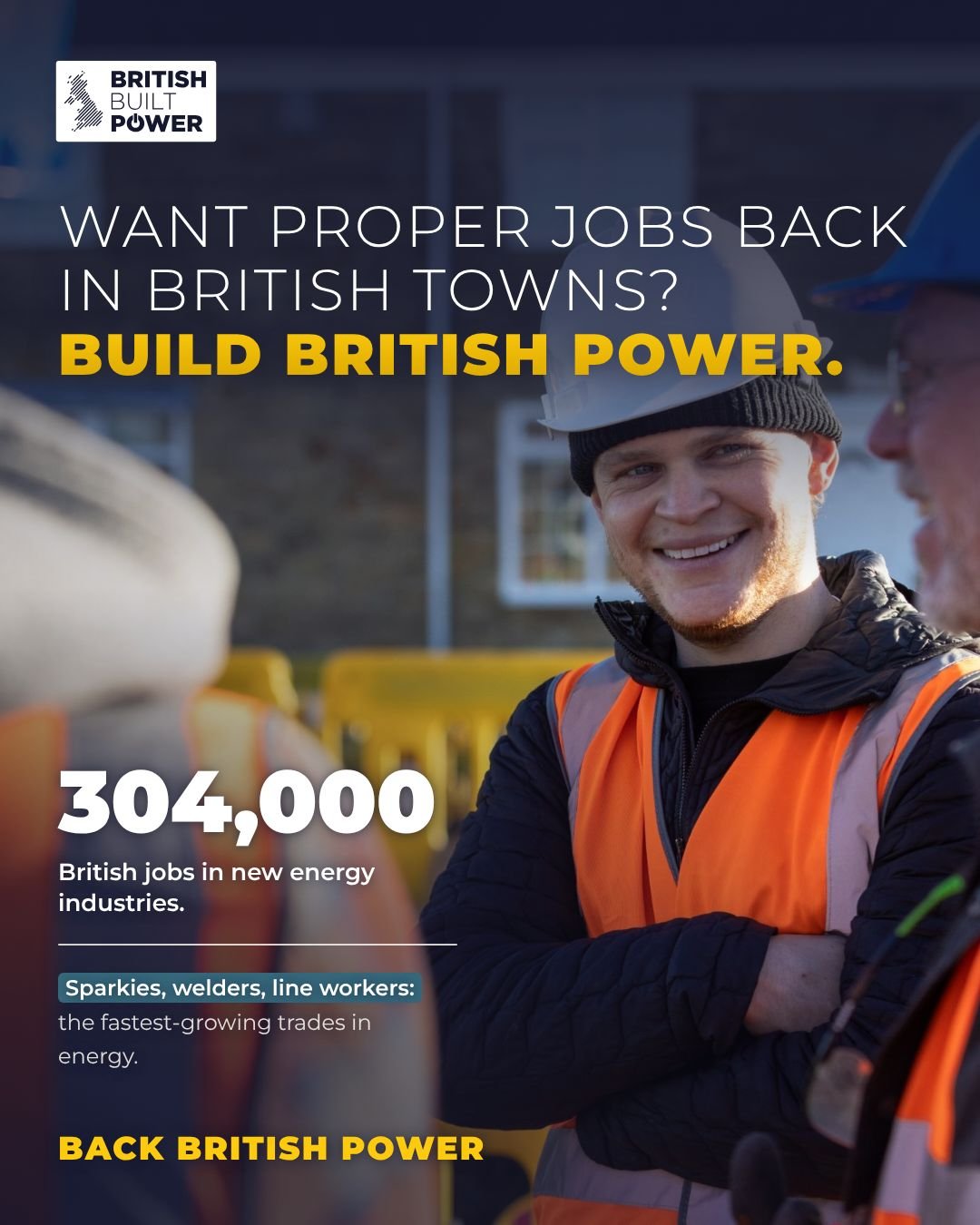
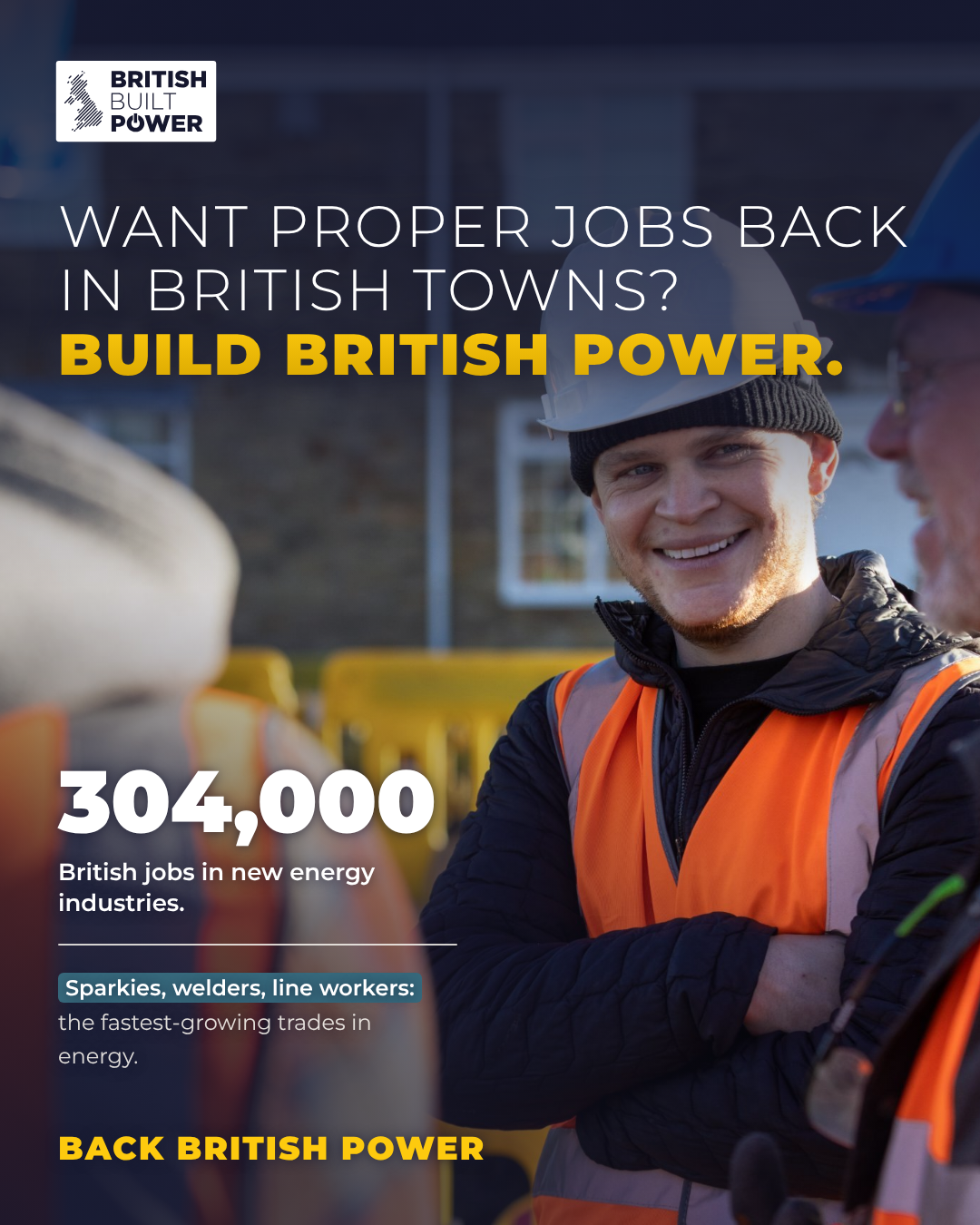
Sparkies, welders and line workers are the fastest-growing trades in energy, and Britain’s new energy industries already support 304,000 jobs.13

Build British power. Train British workers. Power British business.

Energy security is
national security.

In a hostile world, energy security is national security. Twice in five years a foreign crisis has sent British bills through the roof: first Russia, then the Middle East.14 What crisis comes next?

In a crisis, gas goes to the highest bidder, which puts British families in a bidding war with the world.15 A hostile state doesn’t even need to fire a shot. A security workshop run with the world’s oldest defence and security think tank heard that gas price shocks can bring Britain to its knees.16

The answer is abundance. Nobody can corner the wind or the sun, or outbid us for them. A turbine or a panel is bought once and works for decades, while imported fuel has to be bought again every day at whatever price the world demands.

Power made at thousands of sites across Britain is also far harder to knock out than a handful of big plants.16 When the Gulf crisis hit, the British power we’d already built kept wholesale electricity around 30% cheaper than it would have been.17

Plenty of British power keeps the lights on, keeps prices down and keeps Britain in control.

Let’s make more of it and run Britain on British built power.

Vladimir Putin, hand to his chin, at a press conference

Spread the word.

Pick a fact, share it in a tap. Every card carries its source.